


ACL vs PCL vs MCL Injury: How Do They Differ?

The knee is a complex joint responsible for bearing weight and enabling movement and its stability relies on a group of strong ligaments. Among these are the anterior cruciate ligament (ACL), posterior cruciate ligament (PCL) and medial collateral ligament (MCL). An injury to any of these ligaments can cause significant pain, instability and loss of function. These injuries often occur during sports or from direct trauma, affecting athletes and non-athletes alike.
Although these ligaments are all located within the knee, they differ in how injuries occur, the symptoms they cause and the treatments they require. Understanding the differences can help you to seek timely and appropriate medical care.
Understanding Knee Ligament Anatomy
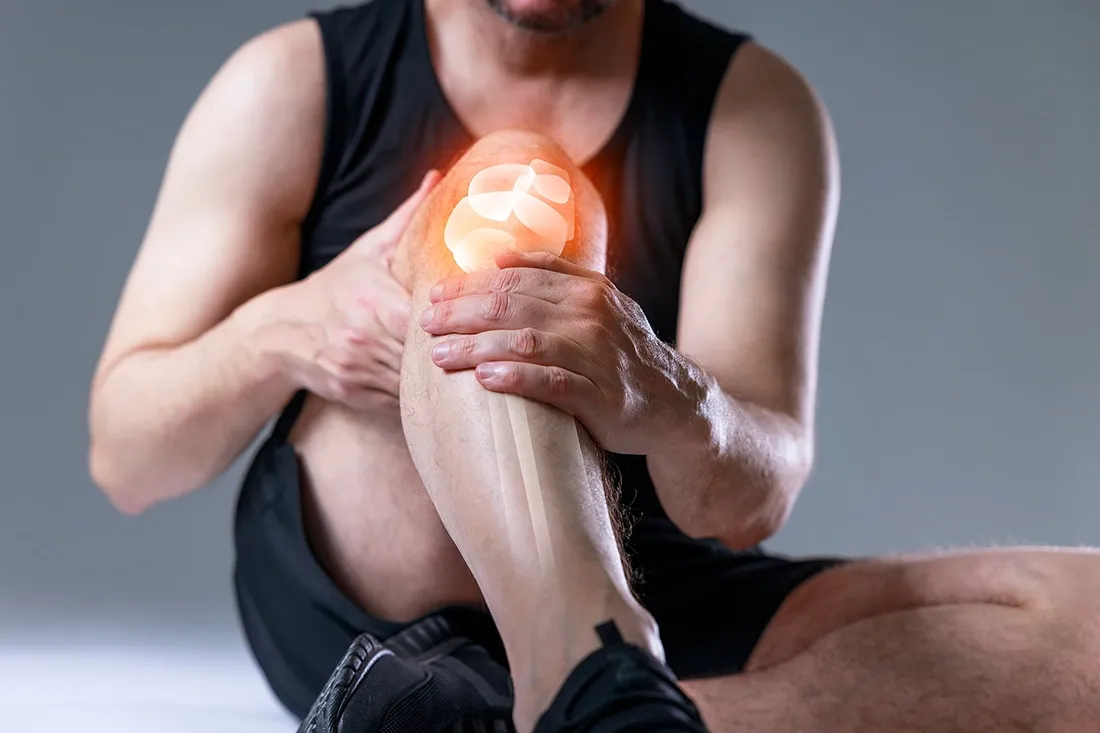
The knee is a hinge joint that connects the thigh bone (femur) to the shin bone (tibia), with the kneecap (patella positioned at the front of the joint). Its stability depends on several key ligaments that work together to guide movement and prevent excessive motion. These include:
Anterior Cruciate Ligament (ACL)
Located at the centre of the knee, the ACL runs diagonally between the femur and the tibia. It helps prevent the tibia from sliding forward and plays an important role in controlling rotational movements during pivoting or sudden direction changes.
Posterior Cruciate Ligament (PCL)
Positioned at the back of the knee, the PCL crosses the ACL to form an “X” shape. It is thicker and stronger than the ACL and helps prevent the tibia from moving too far backwards.
Medial Collateral Ligament (MCL)
Found along the inner side of the knee, the MCL connects the femur to the tibia. It stabilises the knee against inward forces and helps protect the joint during side-to-side movements.
How Do ACL, PCL and MCL Injuries Occur?
The way a knee injury occurs often provides useful clues about which ligament is affected. Each major ligament tends to be injured by a different type of force or movement.
ACL Injury - Pivoting and Sudden Direction Changes
ACL injuries are common in sports that involve rapid movement and quick changes in direction, such as football, basketball, netball and skiing. They often occur during non-contact movements and may result from:
- Sudden changes in direction while running.
- Pivoting or twisting on a planted foot.
- Awkward landings after a jump.
- Direct blows to the knee, such as during a tackle.
PCL Injury - Direct Force to a Bent Knee
The PCL is a strong ligament and injury usually requires a significant force. PCL injuries are commonly associated with:
- Falls directly onto a bent knee.
- A forceful impact to the front of the shin when the knee is bent, such as in road traffic accidents (often referred to as “dashboard injuries”).
- High-impact sports collisions where the knee strikes a hard surface.
MCL Injury - Impact from the Outer Side of the Knee
MCL injuries may occur on their own or together with injuries to the ACL or meniscus. They are most often caused by:
- A force applied to the outer side of the knee that pushes it inward.
- Direct impact or tackles to the outside of the knee.
- Twisting movements while the foot remains fixed on the ground.
What Are the Symptoms of ACL, PCL and MCL Damage?
While pain and swelling are common to all three knee injuries, there are specific symptoms that can help differentiate between ACL, PCL and MCL damage.
ACL Injury Symptoms
Common features reported by patients with an ACL injury include:
- A loud “popping” sound or snapping sensation at the time of injury.
- Immediate or rapid swelling of the knee joint.
- Difficulty continuing the activity or sport.
- A sense of the knee “giving way,” especially during turning or pivoting movements.
PCL Injury Symptoms
PCL injuries may present with more subtle symptoms, including:
- Pain in the back of the knee, which may worsen when kneeling.
- Mild to moderate swelling that develops gradually.
- Difficulty walking downhill or on uneven surfaces.
- A sense of instability, though this is often less pronounced than with an ACL injury.
MCL Injury Symptoms
MCL injuries more often cause:
- Pain or tenderness along the inner side of the knee.
- Localised swelling at the inner joint line.
- Pain when bending, twisting or applying pressure to the outer knee.
- Stiffness or difficulty fully straightening or bending the knee in severe cases.
It is important to remember that symptoms may overlap, and it is possible to injure more than one ligament at the same time. A thorough orthopaedic evaluation is necessary to determine the full extent of the injury.
How Are ACL, PCL and MCL Injuries Diagnosed?
Diagnosis begins with a detailed consultation, during which the doctor asks how the injury occurred and reviews your symptoms. This is followed by a physical examination of the knee to assess swelling, tenderness, stability and range of motion.
During the examination, specific clinical tests are used to evaluate each ligament:
Lachman Test
The doctor gently pulls the tibia forward to check for excessive movement, which may indicate an ACL tear.
Posterior Drawer Test
The tibia is pushed backwards to assess for abnormal movement, suggesting a PCL injury.
Valgus Stress Test
An inward force is applied to the knee to evaluate the stability of the MCL.
What Are the Treatment Options for ACL, PCL and MCL Injuries?
Treatment is tailored to the specific ligament injured, the severity of the tear, and the patient's activity level and goals.
ACL Injury Treatment
ACL tears do not heal on their own due to their poor blood supply. While some less active individuals may manage with non-surgical treatment, surgery is often recommended for active patients to restore knee stability and prevent further damage. ACL reconstruction involves replacing the torn ligament with a tissue graft.
PCL Injury Treatment
Treatment for PCL injuries depends on the grade of the tear and whether other ligaments are involved. Low-grade, isolated tears are often managed non-surgically with physiotherapy. High-grade or multi-ligament injuries may require surgical reconstruction.
MCL Injury Treatment
Most MCL tears, even complete ones, can heal without surgery. Treatment often involves bracing, physiotherapy and following the RICE (Rest, Ice, Compression, Elevation) protocol.
Recovery and Rehabilitation
Physiotherapy is helpful for recovery, regardless of whether surgery is performed. A structured rehabilitation programme will focus on restoring the range of motion, reducing swelling, strengthening the muscles around the knee, and gradually returning to activities.
Recovery timelines vary depending on the ligament involved and the severity of the injury. An MCL injury may heal within a few weeks to several months, while recovery from a PCL injury often takes a similar timeframe. After ACL reconstruction surgery, return to sport usually occurs between 9 and 12 months. Following a structured rehabilitation programme is important to support recovery and reduce the risk of re-injury.
When to See an Orthopaedic Doctor
Patients may consider consulting an orthopaedic doctor if they experience:
- A loud "pop" or snapping sensation at the time of injury
- Immediate or significant knee swelling after a fall or sports incident
- Inability to bear weight on the affected leg
- A feeling of the knee "giving way" or buckling
- Severe pain that does not improve with rest
Getting the Right Treatment for Knee Ligament Injuries
Due to the complexity of the knees, any injury to the ligaments requires prompt and appropriate medical care. An experienced orthopaedic surgeon would be able to conduct a comprehensive evaluation and execute the appropriate treatment plan.
At Axis Orthopaedic Centre, treatment and management options are discussed in detail and tailored to the activity levels of each patient. Dr Seng Chusheng's expertise in a wide range of surgical techniques has been honed through his wealth of experience in performing more than a thousand surgeries, including minimally-invasive and open surgeries for foot and ankle conditions, general orthopaedic trauma and sports-related injuries. For a thorough assessment and an appropriate treatment plan for ACL, PCL and MCL injuries, arrange for a consultation to receive a tailored assessment and discuss the most appropriate treatment options.

Dr Seng Chusheng
Senior Consultant Orthopaedic Surgeon (Sports & Exercise Medicine)
MBBS (Singapore), MRCS (Edinburgh), MMed (Orth), FRCS (Edinburgh)
Dr Seng Chusheng is an orthopaedic surgeon in Singapore with a clinical focus on minimally invasive foot surgery, including bunions and other foot deformities. He has over 10 years of experience and adopts a patient-centred approach, tailoring treatment plans to individual clinical needs.
Before entering private practice, Dr Seng was a consultant orthopaedic surgeon at Singapore General Hospital, where he received the SingHealth Service With A Heart Award. He has also presented at orthopaedic conferences, including the American Academy of Orthopaedic Surgeons Annual Scientific Meeting.



Our Orthopaedic Clinic Locations
With three conveniently located clinics across Singapore, Dr Seng provides accessible and comprehensive orthopaedic care closer to where you live and work. Each location is equipped to deliver accurate diagnosis, treatment, and rehabilitation for a wide range of musculoskeletal conditions.
Medical Centre
#06-33
Singapore 329563
Medical Centre
#04-08
Singapore 427989
Medical Centre A
#03-08
Singapore 574623
Teleconsult Available
For foreign patients, a tele-consult on Zoom or WhatsApp can be done if pre-arranged in advance. Please email or WhatsApp first to enquire.
Opening Hours
Contact Details