







Ankle Sprain Treatment in Singapore

An ankle sprain is a ligament injury affecting the ankle joint, commonly resulting from twisting or rolling movements that place stress on the supporting structures. It involves varying degrees of ligament damage and is typically evaluated based on injury severity, joint stability, and functional impact on movement. Read more below:
What is an Ankle Sprain?
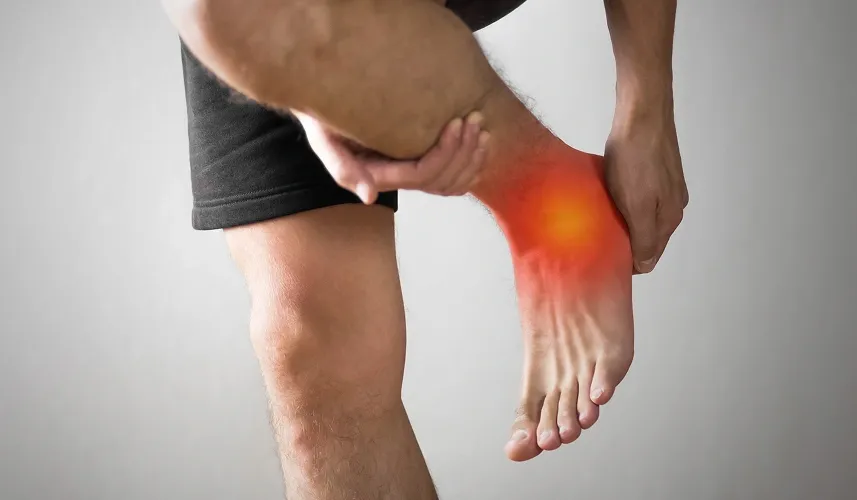
Ankle sprain is one of the leading causes of ankle pain in the general population and is particularly common in people active in sports and dancing. Most ankle sprains occur after an accidental twisting inversion of the ankle joint. This may injure or tear the outer ankle ligaments (anterior talofibular ligament and posterior talofibular ligament) leading to pain and swelling around the ankle joint. Fortunately, most patients who sustained ankle sprains recover after a few weeks and can continue their usual activities.
The recommended initial ankle sprain treatment in Singapore is RICE therapy (Rest, Ice, Compression, Elevation) and is effective in relieving pain and swelling in most cases and preventing further injuries to the ankle in the first 24-48 hours.
What are the grades or classifications of an ankle sprain?
There are different classifications of an ankle sprain, such as:



What are the symptoms of an ankle sprain?
Symptoms of an ankle sprain vary depending on how severe the injury is. Common ones include:
- pain while carrying out weight-bearing activities or even at rest.
- bruising and swelling of the affected area
- limited movement
- tenderness when touched
- ankle instability
- popping sound or sensation during the injury
What are the causes of ankle sprains?
An ankle sprain happens when the ankle joint is moved forcefully from its normal position, resulting in one or more ligaments in the ankle stretching, or tearing completely. When this happens, ankle surgery might be needed. Some of the most common causes of ankle sprains include:
- a strong fall
- engaging in sports activities
- landing inappropriately on one’s foot after a jump or turn
- walking on uneven surfaces
- using or wearing inappropriate footwear
What are the risk factors?
People are vulnerable to ankle sprains when they are exposed to risk factors such as:
- Poor conditioning before engaging in extreme or strenuous activities
- Fatigue of the muscles and ligaments that are caused by overexerting oneself
- Bearing excess weight
- Previous ankle injuries or damage
What are the possible complications of an ankle sprain?
Some people who have sustained ankle sprains previously have a higher likelihood of developing complications. Reasons include failure to receive proper diagnosis and ankle sprain treatments, participating in strenuous activities after spraining the ankle, and having repeated sprains on the same ankle.
When this happens, complications such as the following can occur:
- Instability of the ankle joint
- Chronic ankle pain
- Stiffness
- Swelling
- Arthritis in the ankle joint
How do you prevent yourself from having an ankle sprain?
While there are a wide range of ankle sprain treatments in Singapore available, prevention is still the best cure. To lower your risk of incurring an ankle sprain, try the following tips:
- Warming up before engaging in any sports activities
- Being extra careful when walking on uneven surfaces
- Wearing appropriate footwear
- Using an ankle support brace on an ankle sprain that is either weak or injured
- Maintaining healthy muscle strength through exercise
- Engaging in stability training
- Stretching regularly
- Resting your muscles and feet when they have been overexerted
How long does a sprained ankle take to heal?
The amount of time needed to recover from an ankle sprain depends on how serious the injury is. A minor sprain can take nearly two weeks to heal, while a serious or severe pain can take 6-12 weeks.
What should you do when you have an ankle sprain?
The recommended initial treatment is RICE therapy (Rest, Ice, Compression, Elevation) and is effective in relieving pain and swelling in most cases and preventing further injuries to the ankle in the first 24-48 hours.
When should you see an Orthopaedic specialist for your ankle sprain?
- When your pain is severe and you are unable to put weight on the ankle and walk
- If your ankle swelling persists and does not improve with RICE therapy
- If you have repeated/recurrent ankle sprains with features of an unstable ankle such as it is ‘giving way’ frequently (Chronic ankle instability)
- If a serious ankle sprain is left untreated, it can potentially lead to chronic ankle pain, instability, and arthritis of the ankle

How will our doctors evaluate you when you see them for ankle sprain?
- We will obtain details on the mechanism of your injury
- We will thoroughly examine the ankle to determine the severity and extent of injury
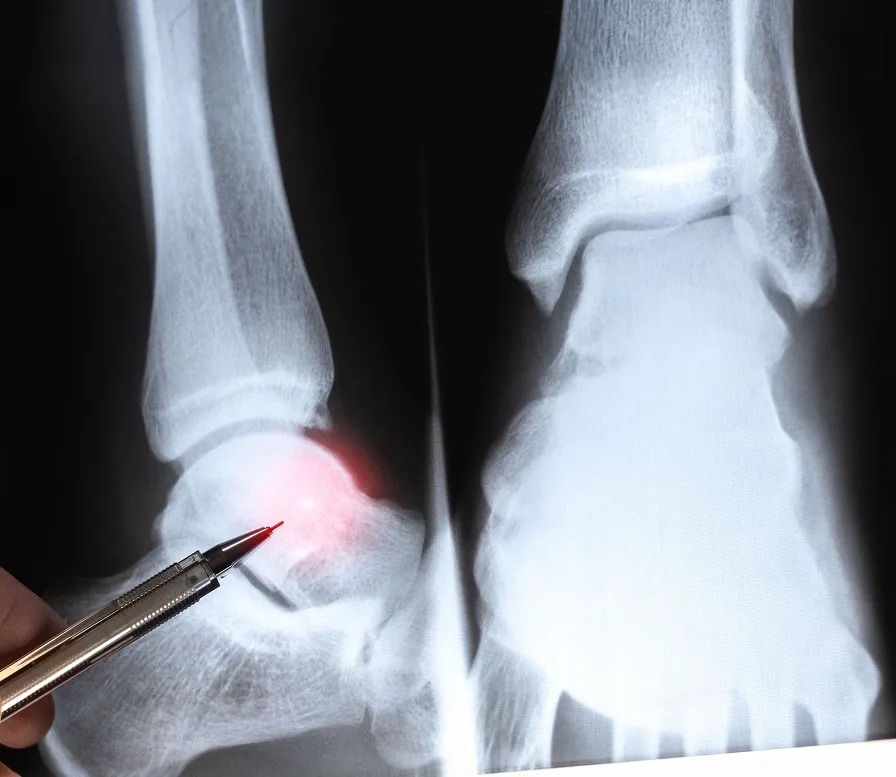
- X-rays will be performed to exclude fractures
- If your pain has been persistent for 4-6 weeks and you have features of chronic ankle instability such as an ankle that ‘gives way on uneven ground, we may order an MRI (magnetic resonance imaging) scan of the ankle further evaluation
- We may provide you with recovery aids such as splints and ankle braces
- We may refer you to a physiotherapist in our team, to teach you physical therapy to strengthen the ligaments and muscles around your ankle, restore range of motion, improve balance and proprioception to reduce the risk of further sprains
Call us to evaluate you if you have an ankle sprain!
When is surgery indicated?
Fortunately, most patients improve with non-surgical ankle treatment. Only a selected group of patients may require surgery and they usually have already attempted non-surgical treatment without satisfactory improvement.
Patients who may need ankle sprain surgery in Singapore may have:
- Chronic ankle instability with multiple and recurrent ankle sprains despite physiotherapy and wearing of splints and braces, and with MRI evidence of ligamentous injury/tears
- Chronic debilitating ankle pain with locking sensation and MRI evidence of osteochondral injury (cartilage defect) of the talus and loose bodies in the ankle joint
Call us to evaluate if you may need an ankle surgery in Singapore!
What surgeries does Axis Orthopaedic Centre offer for ankle sprains?
Our orthopaedic specialists are well trained and competent in performing surgeries of the ankle with excellent outcomes.
MIS(Minimally invasive surgery) with ankle arthroscopy has the advantage of visualizing the ankle joint via keyhole incisions. During the procedure:
- Scar tissue and loose bodies in the ankle joint can be removed (to relieve locking symptoms and impingement)
- Small osteochondral injuries to the talus can be treated via microfracture with cartilage scaffold to stimulate healing
- In addition, the outer ankle ligaments can be repaired/reinforced during the same procedure to achieve ankle stability
Mini open ankle ligament reconstruction/repair can be performed for revision cases with internal brace
Call us to discuss the optimal surgery for your ankle problem today!
About Dr Seng Chusheng

Dr Seng Chusheng
About Dr Seng Chusheng
Dr Seng Chusheng is a consultant orthopaedic surgeon at Axis Orthopaedic Centre, specialising in foot and ankle surgery. His expertise includes minimally invasive bunion correction, complex foot and ankle fracture fixation, keyhole ligament reconstruction and cartilage repair. Over the course of his career, he has performed more than a thousand surgeries and manages a broad range of conditions, including general orthopaedic trauma and sport-related knee injuries.
Dr Seng received advanced fellowship training at the Assal Centre in Geneva, Switzerland, focusing on complex deformities, trauma and minimally invasive techniques. Before entering private practice, he served as a consultant orthopaedic surgeon at Singapore General Hospital and continues as a visiting consultant. His dedication to patient care has been recognised with the SingHealth Service With A Heart Award. Actively involved in research and education, Dr Seng regularly presents at local and international conferences and has published extensively in peer-reviewed journals, reflecting his commitment to advancing orthopaedic practice.



Our Orthopaedic Clinic Locations
With three conveniently located clinics across Singapore, Dr Seng provides accessible and comprehensive orthopaedic care closer to where you live and work. Each location is equipped to deliver accurate diagnosis, treatment, and rehabilitation for a wide range of musculoskeletal conditions.
Medical Centre
#06-33
Singapore 329563
Medical Centre
#04-08
Singapore 427989
Medical Centre A
#03-08
Singapore 574623
Teleconsult Available
For foreign patients, a tele-consult on Zoom or WhatsApp can be done if pre-arranged in advance. Please email or WhatsApp first to enquire.
Opening Hours
Contact Details