







Total Ankle Replacement in Singapore

Total ankle replacement is a surgical option used to relieve long-standing ankle pain and improve function in people with severe joint damage. The aim of the procedure is to reduce stiffness and discomfort while allowing more natural movement at the ankle. Read more below:
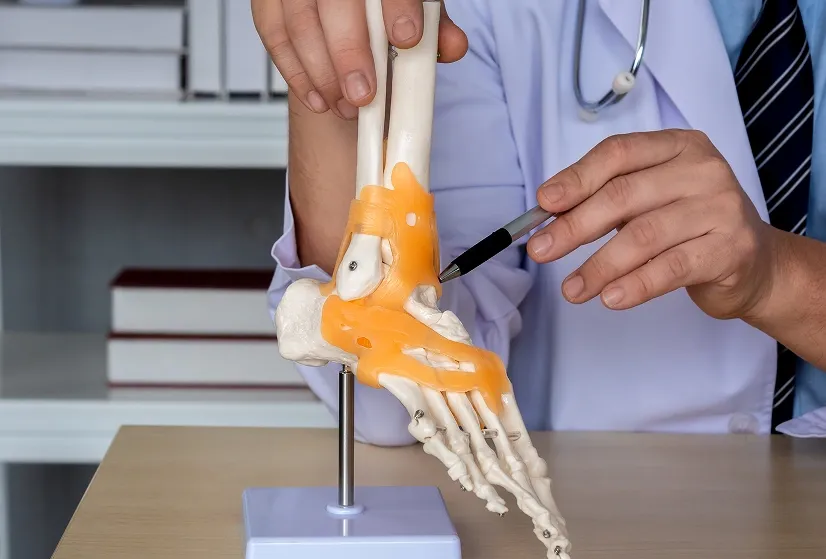
What is a Total Ankle Replacement?
Total ankle replacement, also known as ankle arthroplasty, involves replacing a damaged or diseased joint with an artificial implant.
These prosthetic components are typically constructed from high-grade metal and medical-grade plastic to restore smooth joint motion.
Who May Need a Total Ankle Replacement?
Total ankle replacements are typically recommended for patients diagnosed with advanced ankle arthritis. This condition often results in persistent pain, swelling, and stiffness that significantly limit mobility and daily function.
A surgical assessment for an ankle replacement may be considered if you experience:
Advanced Osteoarthritis or Rheumatoid Arthritis
Chronic inflammation or wear and tear that has severely degraded the cartilage within the ankle joint.Persistent Resting Pain
Chronic discomfort that continues even when the joint is not in use or during sleep.Weight-Bearing Pain and Pressure
Severe pain that intensifies when standing, walking, or applying any pressure to the affected foot.Chronic Ankle Instability or Weakness
A frequent sensation of the ankle giving way or a lack of structural support during movement.Severely Limited Range of Motion
Significant stiffness that prevents the foot from flexing or moving through its natural path.Impaired Walking and Mobility
Pain that makes standard activities, such as climbing stairs or walking on uneven surfaces, increasingly difficult.Post-Traumatic Arthritis from Fractures
Degeneration that follows a previous severe break or injury to the ankle bones.
Generally, this procedure is recommended for older adults or patients whose symptoms no longer respond to conservative management, such as anti-inflammatory medication, corticosteroid injections, and physiotherapy.
Who May Not Be Suitable for the Procedure?
Certain clinical factors and pre-existing conditions may affect a patient’s suitability for a total ankle replacement. These include:
Obesity or Excessive Body Weight
Increased mechanical stress on the prosthetic components may lead to premature wear or implant failure.Severe Ankle Ligament Laxity
Weakened ligaments may not provide the necessary structural support to stabilise the artificial joint.Significant Foot or Ankle Misalignment
Severe structural deformities can cause uneven pressure on the implant, compromising long-term outcomes.Uncontrolled Diabetes Mellitus
Poorly managed blood sugar levels increase the risk of post-operative complications and delayed healing.Peripheral Nerve Damage or Neuropathy
Reduced sensation or muscle control in the lower limb can affect the coordination required for safe mobility.Active or Recent Bone Infections
Any history of local infection must be fully resolved to prevent the risk of prosthetic joint infection.Compromised Peripheral Circulation
Poor blood flow to the lower extremities can significantly hinder the body's ability to heal and recover.
A professional evaluation at Axis Orthopaedic Clinic provides the clarity needed to determine if a total ankle replacement is the most effective solution for your long-term mobility.

How Is a Total Ankle Replacement Performed?
A total ankle replacement is performed under general anaesthesia to ensure the patient remains asleep and comfortable throughout the procedure. The steps to the procedure are:
Step 1: Surgical Access
The surgeon creates an incision at the front or side of the ankle to access the damaged joint.
Step 2: Joint Preparation
Diseased bone and cartilage, along with any loose fragments, are precisely removed to create a clean surface.
Step 3: Implant Fixation
The metal and plastic prosthetic components are accurately aligned and secured to the tibia and talus bones.
Step 4: Incision Closure
Once the joint's stability and range of motion are verified, the incision is closed with sutures or surgical staples.
What Is the Recovery Process Like After Surgery?
Recovery following a total ankle replacement typically spans 6 to 12 months, during which the surgical site must be carefully managed to ensure long-term stability.
In the initial weeks, the ankle is immobilised in a cast or specialised boot, and crutches are required to restrict weight-bearing while the bone integrates with the new implant. To support this healing phase, a clinical regimen of pain relief and anti-inflammatory medication is prescribed to manage swelling, alongside treatments to mitigate the risk of infection or blood clots.
A structured rehabilitation and physiotherapy programme is also essential to restoring the joint's strength and natural range of motion. These targeted exercises focus on improving flexibility and gait mechanics, allowing patients to safely return to their daily activities.
What Are the Pros & Cons of Total Ankle Replacement?
While total ankle replacement offers significant functional improvements, the procedure involves specific clinical trade-offs and long-term considerations:
Potential Benefits
Significant Reduction in Chronic Pain
Replacing the damaged joint surfaces eliminates the primary source of arthritic friction and inflammatory discomfort.Improved Natural Joint Mobility
The prosthetic components allow for a more fluid range of motion compared to joint fusion, preserving the ankle's ability to flex.Enhanced Function in Daily Activities
Restoring mechanical alignment enables patients to walk, stand, and navigate stairs with greater ease and stability.
Limitations and Considerations
Strict Patient Suitability Criteria
Factors such as bone density, ligament strength, and circulatory health may preclude some individuals from being viable candidates.Restriction of High-Impact Activities
To preserve the longevity of the artificial joint, patients are typically advised to avoid repetitive high-impact sports like running or jumping.
How do Total Ankle Replacements & Ankle Fusions Differ?
Both surgical options effectively manage severe ankle arthritis, but they achieve stability and pain relief through fundamentally different mechanical approaches:
Total Ankle Replacement
This procedure aims to preserve natural joint movement and flexibility while significantly reducing arthritic pain through a prosthetic implant.
Ankle Fusion
Also known as arthrodesis, this involves permanently joining the ankle bones to eliminate joint motion, which typically provides reliable pain relief at the cost of flexibility.
The choice between these procedures depends on specific clinical factors, including the condition of the joint, the patient's desired activity level, and overall bone health.

Risks & Complications
While total ankle replacement is a standard clinical procedure, patients should be aware of the following potential risks and post-operative complications:
Infection at the Surgical Site
Bacteria entering the wound or the area surrounding the prosthetic implant may require antibiotics or further clinical intervention.Formation of Blood Clots
Deep vein thrombosis (DVT) can occur following lower limb surgery, necessitating preventative medication and early mobility.Nerve or Blood Vessel Injury
Intraoperative damage to the surrounding neurovascular structures can lead to temporary or permanent changes in sensation.Implant Loosening or Wear
Over time, the mechanical components of the artificial joint may shift or degrade, potentially requiring a revision procedure.Persistent Pain or Joint Stiffness
Some patients may experience ongoing discomfort or a restricted range of motion despite the successful placement of the implant.
Identifying your specific risk profile through a detailed clinical evaluation allows for a safer and more effective treatment outcome.
When Should You See a Foot & Ankle Specialist?
Early clinical evaluation by a foot and ankle specialist is recommended if the following symptoms begin to impede natural movement or daily function:
Persistent Ankle Pain Unresponsive to Rest
Chronic discomfort that fails to subside with standard home care often indicates underlying structural damage or joint degeneration.Difficulty Walking or Bearing Weight
Severe pain or a lack of stability when standing suggests that the mechanical integrity of the joint may be compromised.Ongoing Swelling or Joint Stiffness
Persistent inflammation and a reduced ability to fully flex the foot are common signs of internal joint irritation or arthritis.Markedly Reduced Range of Motion
A decrease in the ankle's flexibility can lead to compensatory movements in the knee and hip, increasing the risk of secondary injury.Symptoms Impacting Daily Activities
When pain prevents the completion of routine tasks or exercise, a professional assessment is necessary to determine the appropriate treatment.
FAQs About Total Ankle Replacements
Can I walk normally after a total ankle replacement?
Are there non-surgical alternatives to a total ankle replacement?
Will I need physiotherapy after a total ankle replacement?
What activities should be avoided after an ankle replacement?
Can both ankles be replaced at the same time?
Restore Your Ankle Mobility with Axis Orthopaedic Centre
Restoring your natural gait and reducing chronic arthritic pain through total ankle replacement requires a high degree of clinical precision and a comprehensive understanding of the joint’s complex mechanics. Whether your symptoms stem from post-traumatic degeneration or advanced inflammatory arthritis, early clinical intervention is essential to prevent secondary complications and persistent joint stiffness.
At Axis Orthopaedic Centre, we provide a full spectrum of specialist care ranging from conservative rehabilitation to advanced ankle arthroplasty. Dr Seng Chusheng and our clinical team are dedicated to developing evidence-based treatment plans that align with your unique activity levels and lifestyle goals. If persistent ankle discomfort is affecting your quality of life, contact us today to schedule a detailed assessment and take the first step toward pain-free movement.
About Dr Seng Chusheng

Dr Seng Chusheng
About Dr Seng Chusheng
Dr Seng Chusheng is a consultant orthopaedic surgeon at Axis Orthopaedic Centre, specialising in foot and ankle surgery. His expertise includes minimally invasive bunion correction, complex foot and ankle fracture fixation, keyhole ligament reconstruction and cartilage repair. Over the course of his career, he has performed more than a thousand surgeries and manages a broad range of conditions, including general orthopaedic trauma and sport-related knee injuries.
Dr Seng received advanced fellowship training at the Assal Centre in Geneva, Switzerland, focusing on complex deformities, trauma and minimally invasive techniques. Before entering private practice, he served as a consultant orthopaedic surgeon at Singapore General Hospital and continues as a visiting consultant. His dedication to patient care has been recognised with the SingHealth Service With A Heart Award. Actively involved in research and education, Dr Seng regularly presents at local and international conferences and has published extensively in peer-reviewed journals, reflecting his commitment to advancing orthopaedic practice.



Our Orthopaedic Clinic Locations
With three conveniently located clinics across Singapore, Dr Seng provides accessible and comprehensive orthopaedic care closer to where you live and work. Each location is equipped to deliver accurate diagnosis, treatment, and rehabilitation for a wide range of musculoskeletal conditions.
Medical Centre
#06-33
Singapore 329563
Medical Centre
#04-08
Singapore 427989
Medical Centre A
#03-08
Singapore 574623
Teleconsult Available
For foreign patients, a tele-consult on Zoom or WhatsApp can be done if pre-arranged in advance. Please email or WhatsApp first to enquire.
Opening Hours
Contact Details